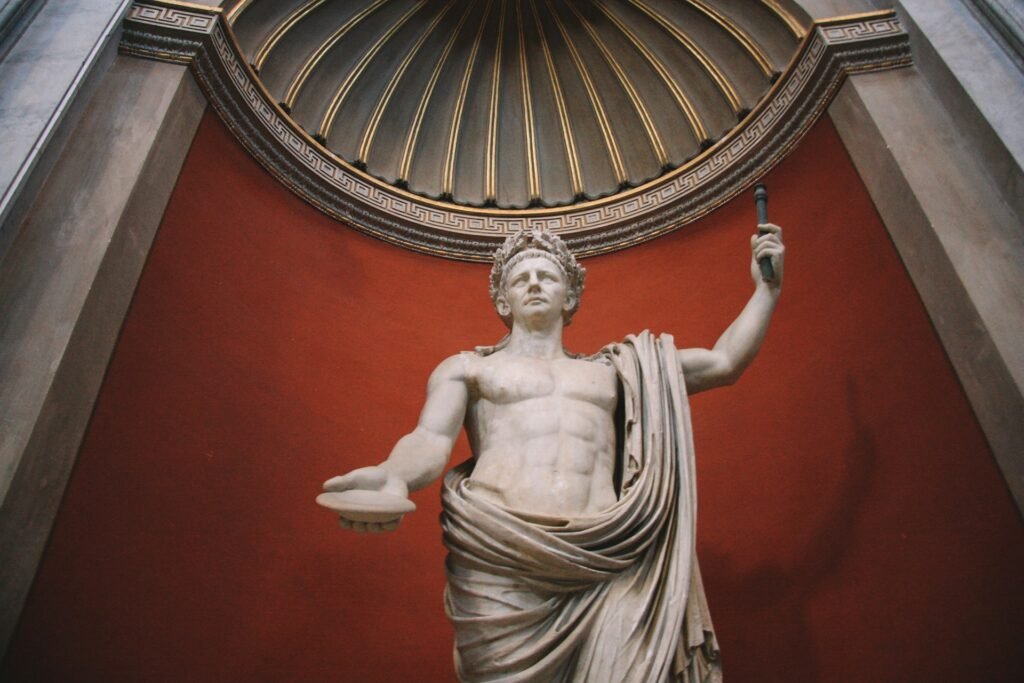
In the beginning, there was no religion called Christianity. There was only a radical Jewish teacher from Galilee who spoke of a Kingdom “not of this world.” Yeshua of Nazareth walked among fishermen, tax collectors, and outcasts, offering not doctrine but awakening. His words were not laws, but keys meant to unlock the inner life, to restore direct communion between the human spirit and the Divine. He declared this connection with stunning clarity: “The kingdom of God is within you” (Luke 17:21). He did not point to a distant, judging monarch but to a loving Father whose children we all are, going so far as to call his disciples his brothers and sisters (Matthew 12:50). His message was a profound empowerment: “Very truly I tell you, whoever believes in me will do the works I have been doing, and they will do even greater things than these” (John 14:12). He insisted that if we had faith as small as a mustard seed, we could say to a mountain, ‘Move from here to there,’ and it would move (Matthew 17:20). This was not a call to form a new priesthood, but a declaration that the creative power of God dwells within every human being. What emerged after his crucifixion, however, was something he never preached: a religion built in the image of the very empire that killed him, an institution founded on the very sense of human inadequacy he came to abolish.
The Roman Hijacking of the Gospel
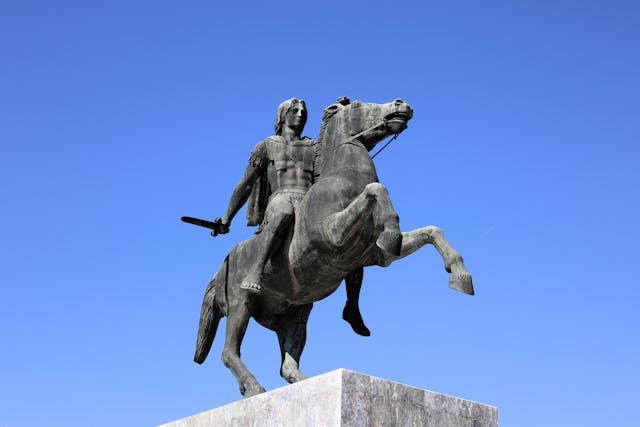
When Yeshua was crucified, Rome believed it was executing another political rebel. What it did not anticipate was that his followers would begin to proclaim his resurrection as the dawn of a new kingdom, one that threatened all earthly authority. For three centuries, followers of “The Way” lived on the margins, often persecuted, refusing to bow to Caesar or fight Rome’s wars. They gathered in homes, broke bread as equals, and shared possessions freely (Acts 2:44–47). This early movement was a spiritual fellowship, anarchic in its humility and radically egalitarian.
That all changed with Emperor Constantine. His alleged vision of the cross before the Battle of the Milvian Bridge, In hoc signo vinces (“In this sign, conquer”) was a fatal turning point. It weaponized the symbol of sacrificial love into a banner for imperial conquest. The Council of Nicaea in 325 CE, convened by Constantine, was not a spiritual gathering but a political one, where bishops allied with imperial power began standardizing the faith into creeds and dogmas. Christianity was no longer a path of inner transformation; it became a state-sanctioned machinery of control. The cross, the ultimate symbol of Rome’s brutality, was now repurposed as the emblem of Rome’s divine right to rule.
From Liberation to Law: The Engineering of Guilt

The empire’s genius was not in destroying Yeshua’s message but in systematically inverting it. The Sermon on the Mount was transformed from a description of liberated consciousness into an impossible moral code designed to induce failure. The promise that we are “children of God” (John 1:12) and “co-heirs with Christ” (Romans 8:17) was buried under a new foundational doctrine: the total depravity and innate sinfulness of humanity. This was a masterstroke of psychological control. By teaching people to see themselves as fundamentally broken and guilty, the institution made itself indispensable as the sole mediator of forgiveness.
This created a spiritual dependency economy. Salvation was no longer a present awakening to our divine nature but a future transaction mediated by the clergy, dependent on obedience and ritual. The living Christ, who promised rivers of living water would flow from within the believer (John 7:38), was replaced by a celestial judge whose favor had to be earned. The church, in a tragic irony, began to embody the very spirit of the religious authorities Yeshua condemned those who “tie up heavy, cumbersome loads and put them on other people’s shoulders” (Matthew 23:4).
The Theological Disfigurement of Christ

To consolidate power, the imperial church had to eliminate the threat of an empowered, sovereign believer. The early mystics and Gnostics, who taught of the inner Divine Light, were violently suppressed as heretics. Their texts were burned and buried because their message of unmediated access to God dissolved the need for a hierarchical institution. The Gospel of Thomas, which records Yeshua saying, “If you bring forth what is within you, what you bring forth will save you. If you do not bring forth what is within you, what you do not bring forth will destroy you,” was lost for 1,600 years for a reason: it empowered the individual. Women leaders like Junia, who was “outstanding among the apostles” (Romans 16:7), were written out of history as the church structure mirrored the patriarchal Roman Senate.
The most revolutionary aspects of Yeshua’s teachings were sanitized. His promise that his followers would do “greater things” was ignored as blasphemous, replaced with a theology of human inadequacy. The idea that we could “move mountains” was dismissed as metaphorical, lest people realize the latent creative power they held. The institutional church, like the empire it replaced, could not tolerate a populace of spiritually sovereign individuals, each one a living temple.
Reclaiming the Unmediated Path

What was born as a revolution of spiritual awakening became a religion of psychological control. The empire that crucified Yeshua ultimately enshrined him, ensuring his message of inner divinity would be worshipped from a distance but never embodied. The world was taught to worship Christ from a distance, rather than to embrace him as the blueprint for our own spiritual potential. The relentless emphasis on guilt, sin, and a future judgment day is not a minor flaw in Christianity; it is the very mechanism by which the institution maintains its power, directly contradicting Yeshua’s core message of our inherent worth and connection to the Father.
To truly follow Yeshua today is to undertake the most subversive act: to deconstruct the religion that bears his name. It is to reject the borrowed guilt and to reclaim our identity as children of God, capable of greater things. It is to silence the voice of the institution and to listen instead to the quiet truth he pointed to within us all. To follow Yeshua today is not to return to religion; it is to dismantle it. It is to walk out of the temple of fear and back into the garden of divine intimacy, to drink again from the river that Rome tried to bottle. For the Christ who lives is not the property of history or empire, but the eternal whisper reminding us that we are not separate, that we were always home.
— Banchu (Nama)